
Does wrapping your car affect your insurance? Usually no rate change, but you need to report the color change and know how coverage works.
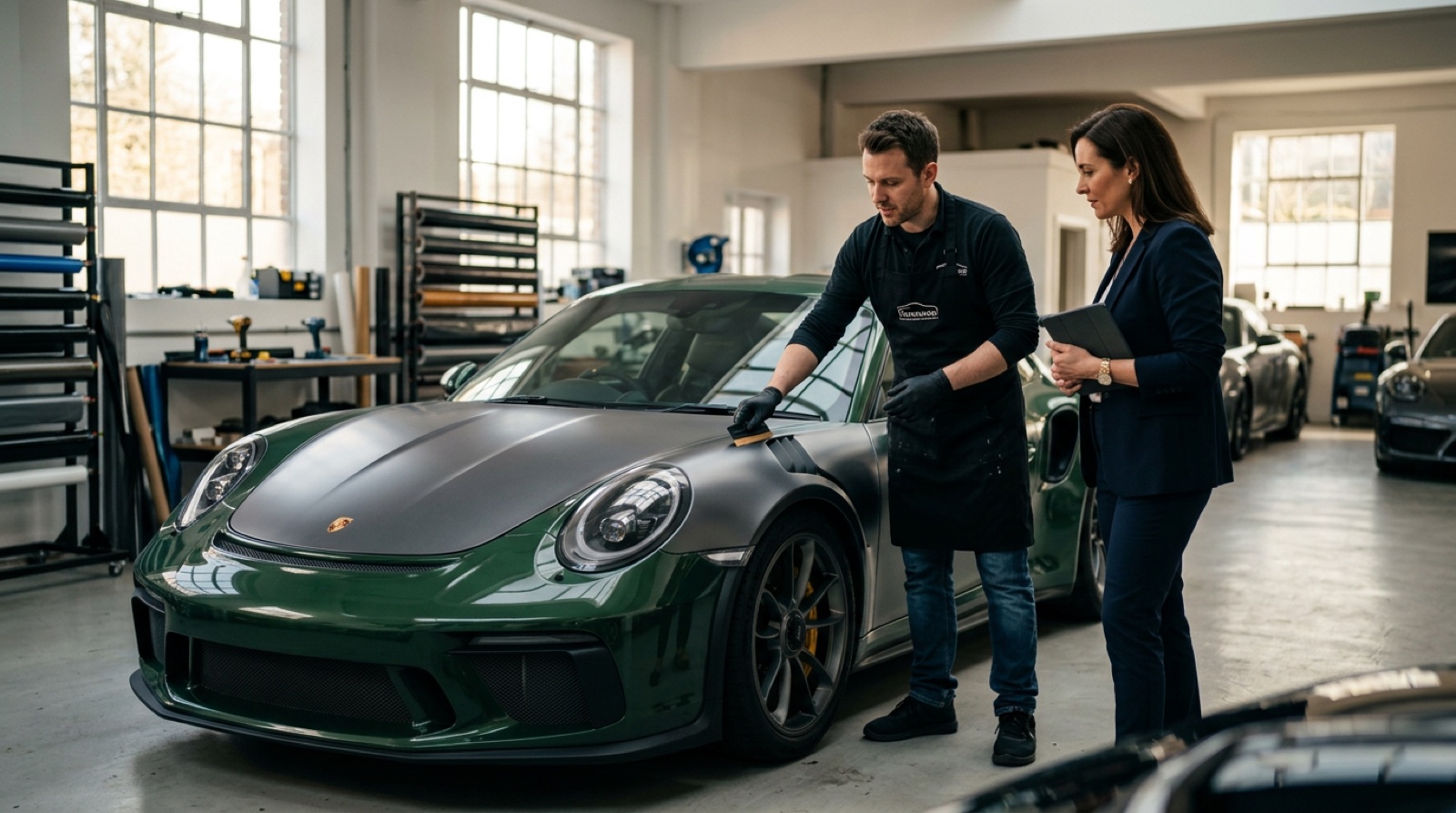
In almost every case, a vinyl wrap does not raise your insurance premium. It is a cosmetic change, not a performance modification, so most carriers treat it very differently from a turbo kit or a suspension swap.
What does change is your paperwork. If you wrap your car a different color, you are supposed to tell your insurer, and in Oklahoma you also need to update the color on your vehicle registration.
Insurance pricing is built around risk of loss. Underwriters care about how likely you are to crash, how much a repair costs, and how likely the car is to be stolen.
A wrap does not make a car faster, harder to control, or more expensive to fix mechanically. It also does not touch the frame, the drivetrain, or the safety systems.
Because of that, a standard full color change in vinyl usually lands in the same category as tinted windows or a new set of wheels. Some carriers do not even flag it. Others log it as a cosmetic modification with no premium adjustment at all.
Call your agent and tell them the car is now a different color. It takes five minutes and it protects you later.
The reason is simple. If your insurer has your Tahoe listed as white and an adjuster shows up to a satin black truck, that mismatch invites questions you do not want during a claim.
Oklahoma also expects your registration to reflect the vehicle's actual color. Service Oklahoma handles that update, and it is inexpensive compared to explaining the discrepancy to a trooper on the Broadway Extension.
This is where drivers get surprised. Standard comprehensive and collision coverage pays to restore your vehicle to its pre-loss condition, which generally means factory paint.
If someone rear-ends you in the Quail Springs parking lot, the at-fault driver's liability coverage should pay to repair the damage and re-wrap the affected panels. Documentation is what makes that go smoothly.
| Situation | Typical coverage outcome |
|---|---|
| Collision damage to a wrapped panel | Usually covered, including re-wrapping the panel, with an invoice on file |
| Hail damage under the vinyl | Covered under comprehensive, though the wrap is replaced separately |
| Vandalism or a keyed panel | Covered under comprehensive, subject to deductible |
| Wrap peeling or fading over time | Not covered by insurance, this is a warranty or wear issue |
| Total loss | Payout is based on vehicle value, not the wrap, unless it is scheduled |
The pattern is consistent. Insurance covers sudden accidental damage, not the natural aging of the material.
Keep your itemized invoice somewhere you can find it. It should list the film brand, the finish, the panels covered, and the labor.
Take clear photos of the finished vehicle from all four corners in good daylight. Those photos plus the invoice are what turn a debated claim into a paid one.
If you spent real money on a printed design or a specialty finish, ask your agent about adding a rider. Riders for a few thousand dollars of custom work usually cost very little per year.
If your wrapped vehicle is totaled, the settlement is based on the actual cash value of the vehicle. A wrap does not add to that number in most cases.
This surprises people who spent four figures on a fully custom printed design and assume it becomes part of the car's value. Insurers do not treat cosmetic vinyl as an appreciating asset.
Scheduled personal property or a customization endorsement is the fix. Ask specifically whether your carrier offers a custom parts and equipment endorsement, because coverage limits vary widely between companies.
Clear film and window tint follow the same logic. Neither raises your rate in normal circumstances, and both are treated as cosmetic or protective add-ons.
Tint has one extra wrinkle. Oklahoma sets legal limits on visible light transmission, and a tint that violates state law can create problems that go beyond insurance.
We install tint at legal Oklahoma percentages and we install clear protective film on high-impact areas. Neither needs to be reported the way a color change does, though noting a large PPF investment on your policy is not a bad idea.
Insurance is not the only party with an interest in your car. If you lease or finance, your agreement may have its own rules about modifications.
Vinyl is the friendliest option here because it comes off. A properly installed and properly removed wrap leaves the factory paint intact underneath.
Still, read your lease language before you commit to anything permanent looking. A quick call to the leasing company saves arguments at turn-in.
We work with drivers across Edmond, north Oklahoma City, Yukon, and Mustang, and we hand over an itemized invoice with every job specifically so it can go straight into your insurance file.
If you are weighing a finish and want the documentation handled properly from the start, reach out for a quote and we will walk through the details with you.
Wrap It Right, Document It Right
Get an itemized quote you can hand straight to your insurance agent.