
DIY car wrap vs professional install: real costs, time, tools, and where DIY goes wrong. What Edmond drivers should know before wrapping.
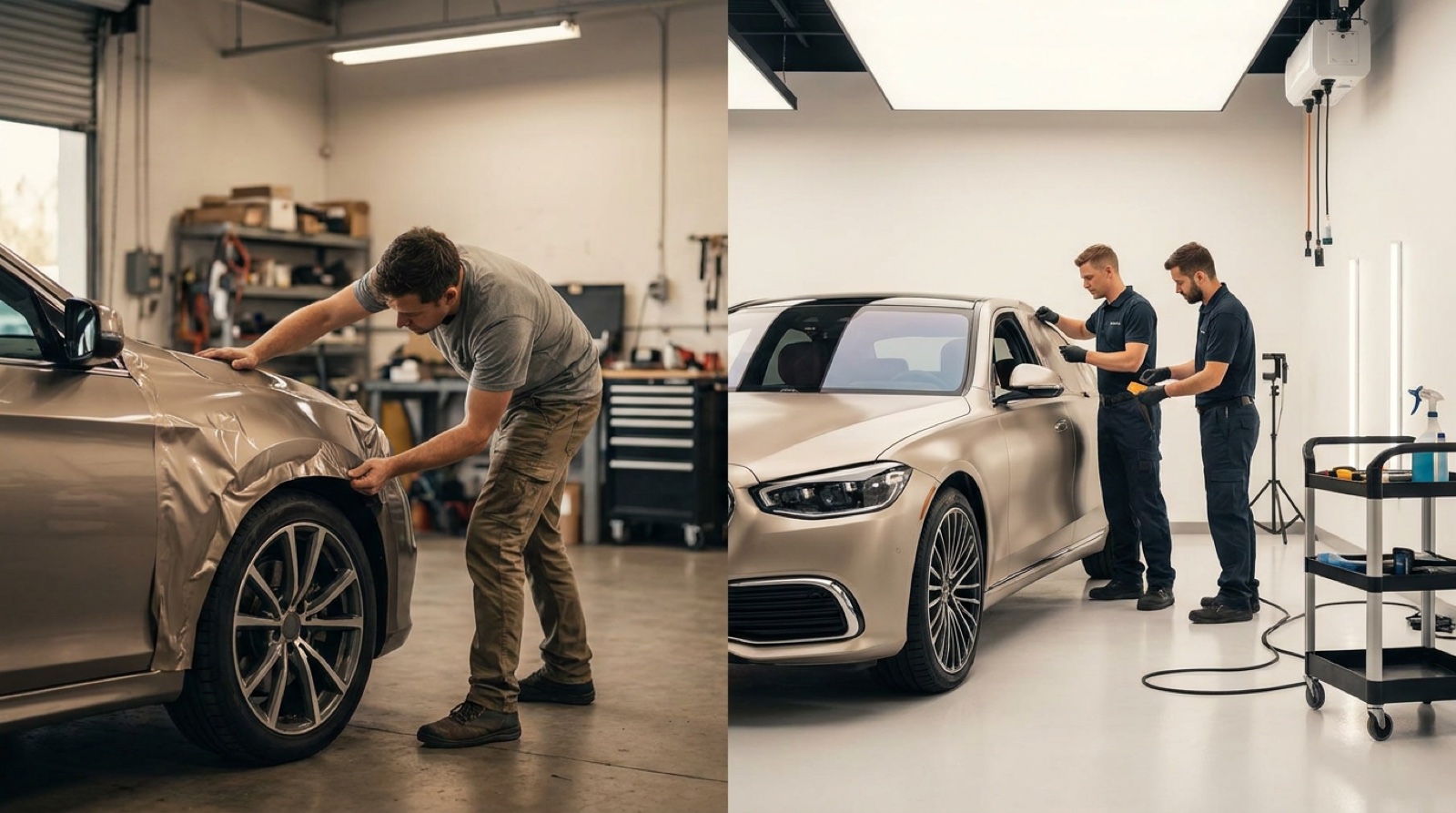
DIY wrapping a full vehicle is possible, but it is far harder than tutorials make it look. Most first-timers end up with bubbles, lifting edges, and wasted material long before they finish a single panel.
A professional install costs more upfront. It also comes out cleaner, lasts longer, and does not eat two weekends of your life.
Here is the honest breakdown of what each route actually demands.
DIY looks cheaper on paper. The vinyl itself is only part of the equation.
Quality cast wrap film runs roughly $500 to $1,200 for enough material to cover a full car. That assumes you buy extra to account for mistakes, and beginners always make mistakes.
Then come the tools. A proper squeegee kit, a heat gun or torch, a knife with fresh blades, gloves, and cleaning supplies add up fast.
| Item | DIY | Professional |
|---|---|---|
| Vinyl material | $500 to $1,200 | Included |
| Tools and supplies | $150 to $400 | Included |
| Labor | Your time | Included |
| Wasted film on errors | Common | Rare |
| Total range | $650 to $1,600 | $2,500 to $5,000+ |
The gap is real, but so is the risk. Ruin one large panel of film and your savings evaporate.
A professional shop can wrap a full car in two to four days. A first-time DIYer should expect much longer.
Plan on 30 to 40 hours spread across several weekends. Bumpers, mirrors, and door handles are slow, fiddly work.
Vinyl has memory. Overstretch it around a curve and it will slowly shrink back and lift, sometimes weeks later.
The failures are predictable. Nearly every home install shows the same handful of problems.
Trapped air bubbles are the most common. They form when the film is laid down too fast or without enough squeegee pressure.
Lifting edges come next. Without proper post-heating and edge sealing, corners and door edges peel within months.
Contamination ruins finishes too. A single speck of dust under the film shows as a permanent bump, and Oklahoma wind makes a clean workspace hard to keep.
Temperature matters more than people expect. Vinyl installs poorly in a cold garage and stretches unpredictably in Edmond summer heat, so climate control is not optional.
Small projects are a reasonable place to learn. Flat, simple surfaces forgive mistakes that a full body panel will not.
Good starter jobs include mirror caps, a roof, or a hood. These are the same areas covered by a partial wrap when you want a change without committing the whole vehicle.
Interior trim and accent pieces are also low risk. If it goes wrong, you have wasted a small piece of film rather than a large one.
A full color change is a different animal. Switching your whole car to a new finish is where most DIY attempts unravel, and a professional color change wrap avoids the seams and lifting that plague home jobs.
The finish is where the gap shows most. A clean professional wrap looks like factory paint from three feet away.
Different finishes also behave differently under the squeegee. A flat matte film shows every fingerprint and adhesive mark during install, while a gloss wrap reveals every bubble and dust particle under light.
Getting a satin finish to sit evenly across a full panel takes practice most first-timers do not have. The material is unforgiving of rushed work.
The difference is not just skill. It is setup, tools, and volume of practice.
| Factor | Why it matters |
|---|---|
| Climate-controlled bay | Consistent temperature and dust control |
| Panel removal | Bumpers and trim come off for clean wrapped edges |
| Correct film selection | Right material for your vehicle and finish |
| Warranty | Coverage if the wrap fails early |
Shops also remove and reinstall parts so the vinyl wraps around edges instead of stopping at them. That single step is what separates a wrap that lasts years from one that peels.
If you want a build tailored to your vehicle, a shop can plan a custom wrap around the exact look you are after. That planning is hard to replicate in a driveway.
DIY works for small, flat, low-stakes projects where a mistake costs a few dollars of film. It is a fair way to learn.
A full vehicle wrap is not that. The money you save rarely covers the film you waste, the time you burn, and the finish you settle for.
If the goal is a clean result that holds up through Oklahoma summers and winters, professional installation is the safer bet. You can get in touch for a quote and compare the real numbers before deciding.
Thinking About Wrapping Your Car?
Get a straight answer on cost and finish from a shop that wraps vehicles every day.